Wednesday, September 30, 2009

Ketsana death toll approaches 300


Ketsana, downgraded from a typhoon to a tropical depression, is heading towards Laos Wednesday after leaving a trail of death and destruction across Southeast Asia.

By early Wednesday morning, the death toll from the storm's rage had crossed 293: at least 246 in the Philippines, 38 in Vietnam and nine in Cambodia.

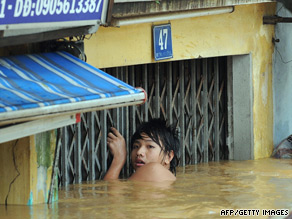
With heavy rains still lashing Vietnam, evacuated residents took advantage of receding waters to return to their homes.

Workers used chainsaws to clear toppled trees from roads so rescue crews could rush relief supplies to the worst-hit areas. Families waded through knee-deep water to salvage precious belongings from flooded houses.

In addition to the 38 deaths, the Central Steering Committee for Flood Control placed the number of missing at 10 and wounded at 81.

The numbers, it said, are expected to rise.

In neighboring Cambodia, the storm knocked down 92 houses in one province alone: Kampong Thom, about 80 miles (130 kilometers) north of the capital Phnom Penh.

Along with rice and blankets, the Cambodian Red Cross planned to donate $120 to each of the affected families so they can afford a traditional funeral for their loved ones.

The nine deaths reported in Cambodia were all in Kampong Thom, with 40 others wounded there, the Red Cross said.

The worst-hit country, the Philippines, began the slow process of clearing up mud and debris Wednesday.

In the city of Pasig -- part of metropolitan Manila -- enterprising residents used inflatable mattresses as makeshift boats to ferry people through flooded streets.

The government, which has come under criticism for allegedly not acting soon enough, opened up part of the presidential palace for aid distribution.

Ketsana left at least 246 people dead as it passed over the Philippines. Another 38 people were still missing, the National Disaster Coordinating Council said.

The storm affected nearly two million people and forced the evacuation of 567,000. At one point, 80 percent of the capital Manila was under water after experiencing the heaviest rainfall in 40 years.

"I did not know what happened," said Gingerly Comprendio. "We were on top of a roof. We got separated. The next day when I came back to our house, I saw my eldest already dead and my aunt saw my other child buried in the mud."

Ray Lee, a prominent judge, single-handedly saved 32 people using his jet ski. "There were cries for help, so I returned to other houses or roofs and retrieved all the people there," he said.

To help avoid a humanitarian catastrophe, several nations have rallied to the Philippines' side.
Secretary General Ban Ki-moon said the United Nations was considering an emergency appeal for aid as several U.N. agencies pledged support. The World Food Program said it will provide rations to 180,000 people.
source cnn.com

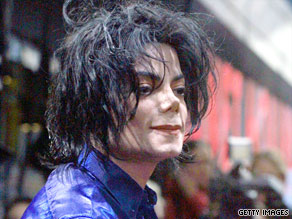
Michael Jackson tapes: Madonna 'is not a nice person'


Michael Jackson was one of the most famous people in the world. Yet for all his global notoriety, the man himself was shrouded in mystery.

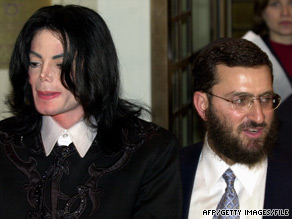
Now some of that mystery has been peeled away. Jackson recorded about 30 hours of deeply personal thoughts with his friend and spiritual adviser, Rabbi Shmuley Boteach, between August 2000 and April 2001.

The results are the basis of a new book, "The Michael Jackson Tapes: A Tragic Icon Reveals His Soul in Intimate Conversation." Boteach joined CNN's Larry King in an interview aired Monday night that painted the pop star as a lonely, injured soul who craved adoration and love but was too damaged to find it.

Boteach's recordings also revealed Jackson's relationships with various family members and celebrities -- some of which were warm, others tense and others painful and dysfunctional.
When Jackson was recording his tapes, Madonna was not held in high esteem.

"She is not a nice person," Jackson told Boteach. Jackson revealed how he and Madonna had bickered about where they would socialize.

"Madonna laid the law down to me before we went out. [She said] I am not going to Disneyland, OK? That's out," Jackson said. "I said, 'I didn't ask to go to Disneyland.' She said, 'We are going to the restaurant. And afterwards, we are going to a strip bar.'

"I said, 'I am not going to a strip bar, where they cross dress. ... I am not going to there. If that's how it is, forget this whole thing. ... Afterwards, she wrote some mean things about me in the press. And I wrote that she is a nasty witch, after I was so kind to her," Jackson said.

King asked Boteach whether Jackson's opinion might have moderated on Madonna, especially in light of her warm comments at his memorial service.

"Well, let's be very fair to Madonna," Boteach said. "These comments by Michael were said about his experiences with Madonna years and years ago, when she had an extremely testy public image. She was the Material Girl, the bad girl. And I think Michael was reacting to that."
Jackson had much more loving things to say about celebrity pal Brooke Shields and ex-wife Lisa Marie Presley.

"[Brooke] was one of the loves of my life. I think she loved me as much as I loved her," Jackson said. "You know, we dated a lot."

Jackson went on to describe his first meeting with Shields and how thrilled he was that the woman whose picture was up on his walls invited him to a party after the Academy Awards.
"So we get to the after-party, she comes up to me and she goes, 'Will you dance with me?" and I went, 'Yes, I will dance with you.' So we went on the dance floor and we danced," Jackson said.
"And, man, we exchanged numbers and ... I was up all night singing, spinning around in my room, just so happy, you know. It was great."

Boteach said Jackson simultaneously held women in reverence and awe yet harbored deep suspicions about their motivations and his perceived their use of sexuality to achieve their goals. Those feelings didn't extend to Presley, however. Boteach played one of his conversations on this subject for King:

Jackson: "Women can do some things that make guys very unhappy. I see it with my brothers. I see my brothers crying in tears and pulling the grass out of the lawn out of frustration because of their wives."

Boteach: "Do you think all their wives were interested more in their success than in them?"
Jackson: "Absolutely. They were after their money. That's why I said to myself, 'I'll never be married.' I held out the longest. I stayed at home until I was 27, 28."

Boteach: "What was part of the attraction to Lisa Marie? That she had her own money? She had her own fame. You knew it wasn't about any of that."

Jackson: "Absolutely. She didn't take a penny, didn't want anything."

Jackson also talked on the tapes about his complicated relationships with his parents, especially his father, Joe Jackson.

Jackson described physical abuse at the hands of his father, including being stripped and oiled down before beatings with a iron cord.

"He would just whip you all over your face, your back, everywhere," Jackson told Boteach. "I would just give up, like there was nothing I could do, you know. And I hated him for it. I hated him."

In a recent appearance on "Larry King Live," Joe Jackson denied ever physically abusing Michael.

Jackson also told Boteach that he and his sister Janet, as children, would pretend that there father was dead and make a game of how they'd react to his death. Michael said he'd ask Janet to picture their father in a coffin, and would ask her if that made her sad. She would repeatedly say it wouldn't, Michael said.

Yet there was more to the father-son relationship. Michael also said he gave a lot of credit to his father for his entertainment success and always held out hope for reconciliation and a loving relationship.

Boteach recalled one conversation he overheard when Michael called his father on the phone:
"I'm going to tell the world how you were responsible for my success. You taught me. You were a great manager," he recalls Jackson telling his father. "You taught me how to perform. You inspired me. You motivated me."

Boteach said that complicated relationship was at the root of many of Michael Jackson's problems and his obsession about children.

"I'm not here to judge Joe Jackson. He was raising nine children," Boteach told King. "But there can be no question that the devastating illustration given by Michael explains so much of his brokenness. Michael shared this, holding a tape recorder to his mouth, because he wanted the world to judge him more charitably."

Boteach said he ultimately broke off his relationship with the singer because he felt like Jackson was going down a self-destructive path and didn't want Boteach's advice or help.

The tapes also revealed other fascinating glimpses of the singer's psyche and thoughts:

• In one of the most stunning exchanges, Jackson suggests that he could have transformed Adolf Hitler's heart if he could have had an hour alone with the Nazi dictator.

• On then-meteoric Britney Spears: "I don't believe that she'll have any great longevity in the public eye because she doesn't understand the power of mystery."

• On his first girlfriend, Tatum O'Neal: "When I held Tatum's hand ... it was the most magical thing. It was better than kissing her."

• On being at the deathbed of Ryan White, the young boy who tugged at the nation's heart during his struggle with AIDS: "I took care of him. He stayed at my house. ... I said, 'Ryan, I promise to you I would do something in your honor on my next album. I will create a song for you. I will sing it. I want the world to know who you are.' I did "Gone Too Soon." That was for him."

• On his regard for children: "I would throw in the towel if it weren't for children and babies, you know. ... I've said it before, if it wasn't for children, I would choose death. I mean that with all my heart."

Despite the break in his relationship with Jackson, Boteach said he had high regard for the singer and the lessons they both learned during their sessions.

"The way I feel right now. I could cry right now listening to his voice again. You know ... Michael was trying to share with the world that our culture thinks somehow that fame and fortune are an acceptable substitute for love and affection," Boteach said. "But Michael discovered that these are empty gifts that leave you bereft."
source cnn.com

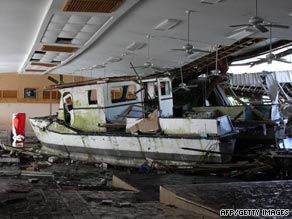
Dozens dead as tsunami slams into Samoan islands


A huge emergency effort is under way in the Samoan Islands after towering tsunami waves triggered by an 8.0 earthquake left dozens dead and entire villages flattened or submerged.

At least 84 people are so far confirmed dead in American Samoa and neighboring Samoa but officials fear the toll will rise as rescue workers work to reach outlying villages. Seven people were also confirmed killed in Tonga.

The quake hit the small cluster of Samoan islands in the South Pacific early Tuesday.
In Samoa, the death toll currently stands at 55, according to government minister Maulolo Tavita, but he said he feared the number of casualities would continue to rise.

In American Samoa, 22 people were confirmed dead by late Tuesday. But Salamo Laumoli, director of health services at the LBJ Tropical Medical Center in the capital, Pago Pago, said he feared more fatalities would turn up as rescue workers were still trying to access parts of the island severed by damaged infrastructure.

"I thought it was the end of the world," said Laumoli. "I have never felt an earthquake like that before."

In Tonga, Lord Tuita, the acting prime minister, said at least seven people had been confirmed dead on the northern island of Niuatoputapu. Three others were missing and four people were being treated for serious injuries, he said.

"The hospital on the island is reported to have suffered major damage; telephone communications has been cut as a result of damage to equipment and facilities on the island; homes and government buildings have been destroyed; the airport runway has been severely damaged making it impossible for any fixed wing aircraft to land," a statement from the Tongan prime minister's office said. Were you there? Send us your photos and video

A series of aftershocks reverberated through the region Tuesday as reports emerged of entire villages flattened or submerged by the tsunami. The walls of water were so strong that they twisted concrete beams and mangled cars.

Laumoli said people in outlying villages on one end of the main American Samoa island have been cut off because the connecting bridge was washed away.

The Pacific Tsunami Warning Center in Ewa Beach, Hawaii, has canceled tsunami watches and warnings for American Samoa. However, a tsunami advisory is still in effect for for the coastal areas of California and Oregon.

The Japan Meteorological Agency canceled a tsunami advisory along its eastern coast Wednesday. The precautionary alert meant forecasters feared a tsunami wave of less than a foot and a half was possible.

American Samoa Gov. Togiola Tulafono, speaking from Hawaii, said Tuesday's quake ranked "right up there with some of the worst" disasters on the island. He said he had spoken to the military about mobilizing reserve forces for assistance.

Tulafono was on his way back home from Hawaii on Tuesday night on one of two U.S. Coast Guard C-130 transport planes delivering aid. He told reporters Tuesday that it was hard being away from home when disaster came calling. It was a time, he said, for families to be together.
President Barack Obama declared American Samoa a major disaster area, ordering federal aid to supplement local efforts.

The Coast Guard is transporting more than 20 officials from the Federal Emergency Management Agency to American Samoa, said John Hamill, external affairs officer for FEMA in Oakland, California.

The FEMA team will include a variety of debris experts, housing experts, members of the Corps of Engineers, and other disaster relief specialists, Hamill said.

The quake generated three separate tsunami waves, the largest measuring 5.1 feet from sea level height, said Vindell Hsu, a geophysicist with the Pacific Tsunami Warning Center. Preliminary data had originally reported a larger tsunami.
source cnn.com

Magnitude 7.9 earthquake strikes Indonesia

An earthquake with a preliminary magnitude of 7.6 struck Indonesia on Wednesday, the U.S. Geological Survey said.

The quake was recorded about 33 miles from Padang, the capital city of West Sumatra, which is home to more than 800,000 people.

Several buildings were damaged, Metro TV reported. People were seen running out of their homes and toward the hills.

The Pacific Tsunami Warning Center of the National Oceanic and Atmospheric Administration issued a tsunami watch for Indonesia, India, Thailand and Malaysia.

NOAA could not immediately say whether the quake generated a tsunami, but such advisories are issued when a quake has the potential to cause one.

On Tuesday, a magnitude 8.0 quake -triggered tsunami killed at least 84 in the Samoan islands and Tonga.

source cnn.com

Tuesday, September 29, 2009

UK set for three-way iPhone price war


Vodafone on Tuesday announced it would start selling Apple's popular iPhone in the UK from early next year, in a move that should bolster efforts to turnround the mobile operator's ailing British business.

It means there will be three UK mobile operators selling the US technology company's iPhone from next year: Vodafone, Orange and O2.

Some analysts said a price war over the iPhone could ensue, making the relatively expensive handset more affordable for consumers.

But the operators, if they increase subsidies for the iPhone so as to maximise sales, would face higher operating expenses.

O2 , the UK's largest mobile operator by number of customers, has been the exclusive British network for the iPhone since 2007. The end of the arrangement is a significant setback for O2.
On Monday Orange, the UK's third largest operator, announced a deal with Apple to sell the iPhone in Britain.

Orange, unlike Vodafone, will be able to sell the iPhone in the run up to Christmas, which is traditionally the most important sales period for mobile phones.

Vodafone, the UK's second largest operator, admits O2's exclusive iPhone deal hurt its British business. It was the largest UK operator until 2006.

Unveiling its Apple deal on Tuesday, Vodafone said it would start selling the 3G and 3GS versions of the iPhone "in early 2010".

It added it would also sell the iPhone in Ireland, where O2 has also been the exclusive network for the handset.

O2 began selling the iPhone in the UK in 2007, and used the handset to poach customers from rivals. It has sold more than 1.5m iPhones.

However, the UK mobile market is preparing for a major shake up after plans for a merger between France Telecom's Orange UK and Deutsche Telekom's T-Mobile UK were unveiled earlier this month.

The combined entity would become the largest UK operator by customer number, overtaking O2 and Vodafone.

O2, which is owned by Spain's Telefonica, said: "We always knew that iPhone exclusivity was for a limited period of time, but our relationship with Apple continues and will be an ongoing success."

The iPhone set a new standard in smartphones, or mobiles that double up as mini computers, partly because of its innovative touchscreen and web browser.

Mobile operators covet the iPhone partly because customers can be persuaded to go beyond tariffs covering phone calls and text messages and pay for data-related services based on internet access.

Apple used the launch of the iPhone in 2007 to sign exclusive network arrangements in the US, France, Germany and UK.

However, as it began selling the iPhone in other countries, Apple established arrangements under which more than one mobile network sold the handset.
source cnn.com

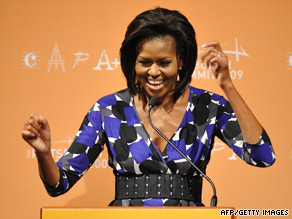
Michelle Obama vows to strike Olympic gold for Chicago


First lady Michelle Obama vowed Monday to "take no prisoners" as she and her husband launch an unprecedented bid for Chicago's 2016 Olympic bid.
"It's a battle -- we're going to win -- take no prisoners," the first lady said with a smile at a roundtable discussion with reporters in the White House State Dining Room.

She compared the intense lobbying effort to the 2008 presidential campaign, noting that in the election campaign, a lot of voters made their decision in the final days. She said members of the International Olympic Committee may do the same.

"And our view is, we're not taking a chance," she said. "We're just not going to assume that the bids -- that the decisions are made, and so that no matter what the outcome is, we'll feel as a country, as a team, that we've done everything that we can to bring it home."

The White House confirmed Monday that President Obama will fly on Thursday to Copenhagen, Denmark, where the International Olympic Committee will be reviewing bids from several countries on Friday. It will be the first time that an American president has lobbied the IOC in this manner.

Mrs. Obama arrives in Copenhagen on Wednesday with White House senior adviser Valerie Jarrett and other top aides.

"What a dynamic duo they will be," Jarrett said. "I think it will be high impact, I think their presentation will be both very personal, given that they know and love Chicago so well."
Mrs. Obama said she and Vice President Joe Biden have been lobbying IOC members by telephone in recent days, and that she plans a packed schedule once she lands in Denmark.

"I think I'm talking to everybody," she said of the dozens of IOC members who will decide the victor.

She will also make a formal presentation to the IOC, before the president makes his own pitch on Friday.

"We're each going to do our own proposal," she said. "I think we have as good a chance as any country."

She joked, however, that there are limits to how far they will work together.

"We're not going to do a joint poem together," Mrs. Obama said with a laugh.

She also revealed a story that suggests she's taking the lobbying very seriously. At last week's G-20 Summit in Pittsburgh, she sat next to the first lady of Brazil, one of the nations with a rival bid.

"I adore her but I said, 'You know, I'm going to hug you now and then I'm going after you in Copenhagen,' " Mrs. Obama recalled with a laugh. "And she said, 'You too.' So gloves are off."

source cnn.com

Secret Service investigating Facebook poll on Obama


The social networking site Facebook on Monday pulled a third-party application that allows users to create polls after a site member built a poll asking if President Obama should be killed.

The U.S. Secret Service, the agency assigned to protect the president, has launched an investigation, agency spokesman James Mackin said.

"As is usually the case, our vigilant users reported it to us first," Facebook spokesman Barry Schnitt told CNN. "The USSS [Secret Service] sent us an e-mail late this morning PDT asking us to take it down. At that point, it had already been removed, and we let them know."

Schnitt said the application "was immediately suspended while the inappropriate content could be removed by the developer and until such time as the developer institutes better procedures to monitor their user-generated content."

Facebook allows third-party developers to create applications -- such as polls and quizzes -- which are then made available to Facebook users, who use the applications to create specific content. Users may choose to make their content available to the general population of Facebook or limit it only to their friends.

In this case, Schnitt said, the user made the poll asking whether Obama should be killed available to the general public.

The possible responses to the poll were "yes," "maybe," "if he cuts my health care" and "no."
Schnitt said the poll "appears to have been posted over the weekend."
source cnn.com

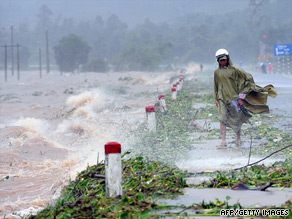
Typhoon Ketsana slams into Vietnam


After lashing the Philippines for several days, killer Typhoon Ketsana gained power over the ocean before slamming into the central Vietnam coastline Tuesday afternoon.

Aid agencies reported that amid flood warnings, some 200,000 people were evacuated from low-lying areas to community centers and schools on higher ground.

Ketsana's maximum winds were reported at 167 kph (104 mph) with gusts as strong as 204 kph (127 mph) as it crossed over the South China Sea and approached land.

The city of Hue, Vietnam picked up an estimated 13 inches of rainfall in a 24-hour period, according to CNN Meteorologist Jennifer Delgado.

The global relief agency World Vision said the Vietnamese government had shut down airports, schools and power in the Danang area, three hours from Hue.

Danang is predicted to be in the eye of the storm. It's very windy and trees have already blown down," said Le Van Duong, World Vision's emergency response coordinator in Danang. "We have seen the evacuation of 3,000 families from our project areas to safer places, including schools, and we have already distributed noodle packs to 700 families." Are you there? Share your story or pictures

Ketsana left at least 240 people dead as it passed over the Philippines. Another 37 people were still missing, according to the nation's National Disaster Coordinating Council. Almost 2 million people were affected by the killer storm and 375,000 people had been evacuated.

The international community rallied Tuesday to help desperate Filipinos in the hopes of avoiding a humanitarian catastrophe.

Several nations including the United States, Australia, Japan and China have already donated money for relief supplies. Secretary General Ban Ki-moon said the United Nations was considering an emergency appeal for aid as several U.N. agencies pledged support. The World Food Program said it would provide rations to 180,000 people.

Flood waters were subsiding in the capital, Manila, which was hit with the heaviest rainfall in 40 years and, at one point last weekend, was 80 percent under water. Watch how people of Manila are coping »

Manila, on the island of Luzon, and the nearby province of Rizal bore the brunt of the storm. People huddled on rooftops waiting on army helicopters to pluck them to safety. Others used ropes to wade through waist-deep muddy waters.

Power and water supply failed in some areas. Roads were rendered impassable, making rescue efforts challenging.

Ketsana is expected to move west across Vietnam into neighboring Laos and Thailand.
source cnn.com

'Lucy in the Sky with Diamonds' dies


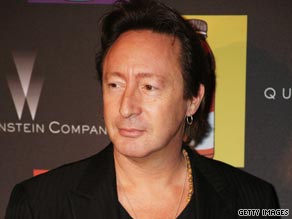
The childhood friend of John Lennon's son who inspired the Beatles' psychedelic masterpiece "Lucy in the Sky with Diamonds" has died aged 46 from the chronic disease Lupus.

Lucy Vodden was a classmate of Julian Lennon, who came home from school one day carrying a drawing of his 4-year-old classmate. "That's Lucy in the sky with diamonds," he told his father.
Lennon seized on the image in and embellished it in a song along with "newspaper taxis" and a "girl with kaleidoscope eyes."

The BBC later banned the track, which appeared on the 1967 album "Sgt. Pepper's Lonely Hearts Club Band," for its supposed drug reference with the words of the song spelling out LSD.
Lennon always claimed though that the title was suggested by Julian, not from any wish to spell out LSD, the chemical name for the drug, acid, in code.

Julian Lennon lost touch with Vodden when he left Heath House nursery school, near his parents' home in Surrey following their divorce in 1968. But they were reunited in recent years when he heard she was suffering from the immune system disease and he lent his support to her.

Vodden's death was announced on Monday by St. Thomas Lupus Trust in London, where she had been treated for more than five years.

"Julian and (his mother) Cynthia are shocked and saddened by the loss of Lucy and their thoughts are with her husband and family today and always," the trust said on its Web site.
Angie Davidson, Campaign Director of the St. Thomas' Lupus Trust said "everyone at the Louise Coote Lupus Unit was dreadfully shocked by the death of Lucy, she was a great supporter of ours and a real fighter, it's so sad that she has finally lost the battle she fought so bravely for so long."

Vodden, who was a housewife from Surbiton, southwest of London, cherished her link to the Beatles, but did not especially like the song she inspired.

"I don't relate to the song, to that type of song," she told The Associated Press in June, according to the Web site, PopEater.

"As a teenager, I made the mistake of telling a couple of friends at school that I was the Lucy in the song and they said, 'No, it's not you, my parents said it's about drugs.' And I didn't know what LSD was at the time, so I just kept it quiet, to myself."
source cnn.com

Monday, September 28, 2009

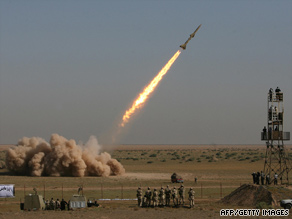
Iran fires off long-range missiles in latest test


Iran test fired two types of long-range missiles on Monday, including the two-stage Sajil, state-run Press TV reported.

"We are still waiting for new reports about the missiles and whether they have hit the targets or not," Brig. Gen. Hossein Salami, Iran's air force commander, said on Press TV. "These are ... advanced long-range missiles and they were manufactured by the ... Islamic Revolutionary Guard Corps."

He said the launches took place Monday morning.

Iran's Islamic Revolutionary Guard Corps began a series of missile exercises Sunday to promote the armed forces' defense capabilities.

The tests, which are expected to conclude later Monday, are codenamed "Payghambar-e Azam 4" or "The Great Prophet 4," Press TV said.

Iran says the Shahab-3 missile, which it also launched Monday, can strike targets within a range of about 800 to 1,250 miles (1,300 to 2,000 kilometers).

The Sajil-2 missile is a solid-fuel rocket with a similar range and has been launched twice before, in November 2008 and May 2009.

If true, the missile brings Moscow, Athens and southern Italy within striking distance.
At the time of the May launch, a White House official said actions in Iran were noteworthy.

"Of course, this is just a test, and obviously there is much work to be done before it can be built and deployed. But I see it as a significant step forward in terms of Iran's capacity to deliver weapons," said Gary Samore, special assistant to the president on nonproliferation.

Iran's testing on Sunday included the Fateh-110, a short-range ground-to-ground missile, and Tondar-69, a short-range naval missile, the station said. Several models of medium-range Shahab missiles were tested at night, Press TV reported.

The tests followed Iranian President Mahmoud Ahmadinejad's disclosure Friday that Iran was building a second uranium enrichment facility.

The United States and Israel believe that Iran is seeking nuclear weapons under the guise of a civilian nuclear energy program.

Iran has repeatedly denied the allegation.

source cnn.com

Bill Clinton: 'Vast right-wing conspiracy' as 'virulent' as ever


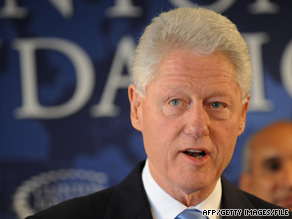
The "vast right-wing conspiracy" that attacked him during his presidency has been weakened, but continues to operate against President Obama, former President Clinton said Sunday.

On NBC's "Meet the Press," Clinton was asked about the term his wife Hillary Clinton, now secretary of state, famously coined. "Is it still there?" host David Gregory asked.

"Oh, you bet. Sure it is. It's not as strong as it was, because America's changed demographically, but it's as virulent as it was," the former president replied.

"I mean, they're saying things about him [Obama] -- you know, it's like when they accused me of murder and all that stuff they did," Clinton said, in an apparent reference to conspiracy theories surrounding the suicide of White House deputy counsel Vince Foster.

"It's not really good for the Republicans and the country, what's going on now," Clinton said. "I mean, they may be hurting President Obama. They can take his numbers down, they can run his opposition up. But fundamentally, he and his team have a positive agenda for America."

The nation needs "a credible debate about what's the right balance between continuing to expand the economy through stimulus and beginning to move back to fiscal balance," Clinton said. "We need a credible debate about what's the best way to get to universal [health care] coverage."

Clinton was asked whether he is concerned that the 2010 midterm elections could resemble those of 1994, when Republicans took control of the House and Senate two years into his first term.

"There's no way" that could happen, Clinton said, adding that "the country is more diverse and more interested in positive action." Also, he said, Republicans had control of Congress for several years under President George W. Bush, "and they know the results were bad."

And, he said, "the Democrats haven't taken on the gun lobby like I did."

"Whatever happens, it'll be manageable for our president," Clinton said

source cnn.com

Scores killed in Philippines floods


The death toll from flooding in the Philippines climbed to 140 Monday as a tropical depression in the Pacific sparked new fears of flooding.

Flood water began to subside after a weekend that saw Manila hit with its heaviest rainfall in more than 40 years.

More than 80 percent of the capital was under water at one point Sunday. The deluge caused by Tropical Storm Ketsana, which has since strengthened into a typhoon, engulfed whole houses and buses.

At least 140 people have died, the National Disaster Coordinating Council said. Are you there? Share your story or pictures

Manila, on the island of Luzon, and the nearby province of Rizal bore the brunt of the storm. People huddled on rooftops Sunday waiting on army helicopters to pluck them to safety. Others used ropes to wade through waist-deep muddy waters.

Power and water supply failed in some areas. Roads were rendered impassable, making rescue efforts challenging. Rescue crews were handing out food rations.

"Right now the challenge is to find out how many people have actually died and how many people we have to take care of in terms of people who've been displaced," said Richard Gordon, the chairman of the Philippines National Red Cross.

"We're really talking about maybe hundreds of thousands of people," with about 280,000 to 300,000 displaced in the island of Luzon alone, he said.

Though the Philippines is no stranger to floods, Saturday's downpours approached a record, with a month's worth of rain falling within six hours.

The average rainfall for the month of September is 391 mm (15.4 inches), said Gilberto Teodoro, chairman of the National Disaster Coordinating Council.

The capital experienced 341 mm (13.4 inches) between 8 a.m. and 2 p.m., he said.

Officials worried that if the rains return, they could bring more floods if reservoirs burst.
"We're hoping that there will be no more breaching of the dams," Gordon said. "That's one of the things that are very disconcerting to many people right now."

Mike Anthony Catuira spent Sunday retrieving valuable belongings and seeking cover on higher ground. Overflowing rivers in the municipality of Tanay in Rizal province had inundated shops and homes, he said.

"The storm's local name 'Ondoy' is really a powerful storm, and this is the most severe storm in my whole life," he said in an iReport video to CNN.

source cnn.com

Michael Jackson tapes reveal his soul, former adviser says


Michael Jackson feared his father so much he would faint or vomit sometimes when his father entered the room -- even when the pop singer was an adult, according to a book written by a former Jackson confidant.

"The Michael Jackson Tapes" includes Jackson talking about his fear of growing old, his relationship with children, his friendships with Madonna and Brooke Shields, and his remarkable shyness around people that made his surround himself with mannequins.

Jackson opened up to Rabbi Shmuley Boteach for 30 hours of interviews, which were taped nine years ago and intended for a book Jackson wanted written, Boteach said.

"He was trying to reclaim his life," Boteach said Friday in an NBC "Today Show" interview.
Jackson, who died on June 25 of what the coroner found to be a deadly combination of drugs, "lost the will to live, I think he was just going through the motions of life toward the end," Boteach told NBC.

CNN has not independently confirmed Jackson's quotes in the book, but Boteach was known to be a spiritual adviser to Jackson for several years beginning about 1999.

Ken Sunshine, spokesman for the family, including the singer's father, Joe, issued a statement on the book. "We are not going to dignify this with a comment," he said.

The book was not published during Jackson's lifetime because of the pop star's child molestation trial, which ended with an acquittal in 2005, the author said. The author said Jackson's arrest ended any interest in a book about him.

"I don't want to grow old," Jackson is quoted as saying in one interview with Boteach.
"When the body breaks down and you start to wrinkle, I think it's so bad," Jackson said.

Jackson talked to Boteach about why he was drawn to children, especially those who were sick.
"I love them. I love them," he said.

Helping children enjoy their childhood is his mission, Jackson said.

"I feel that this is something really, really in my heart that I am supposed to do, and I feel so loved by giving my love, and I know that's what they need," he said.

Jackson said that while adults "appreciate me artistically as a singer and a songwriter and a dancer and a performer," children "just want to have some fun and to give love and have love and they just want to be loved and held."

Boteach, in an interview about two years before Jackson's November 2003 arrest, asked Jackson about the young cancer patient who would later become his main accuser.

"He's special," Jackson said.

Boteach asked Jackson whether by speaking to people like the boy "part of the pain goes away for them."

"Absolutely," Jackson said. "Because every time I talk to him he is in better spirits. When I spoke to him last night he said, 'I need you. When are you coming home?' I said, 'I don't know.' He said, 'I need you, Michael.' Then he calls me 'Dad.'"

Michael Jackson's taped statements about his father's treatment of him as a child echoed what he has said previously.

"He was rough, the way he would beat you, you know, was hard," Jackson said. "He would make you strip nude first. He would oil you down. It would be a whole ritual. He would oil you down so when the flip of an ironing cord hit you, you know, and, it was just like me dying, and you had whips all over your face, your back, everywhere. And I always hear my mother like, 'No, Joe, you're gonna kill him. You're gonna kill him. No.' And I would just give up, like there was nothing I could do. And I hated him for it. Hated him."

Joe Jackson has denied physically abusing his son. "Now, Michael was never beaten by me, I've never beaten at all," he told CNN's Larry King in July. He did suggest he used spankings for disciplining his children.

Another Michael Jackson quote from the book alleged emotional abuse by Joe Jackson:
"God bless my father because he did some wonderful things and he was brilliant, he was a genius, but one day he said, 'If you guys ever stop singing I will drop you like a hot potato.' It hurt me. You would think he would think, 'These kids have a heart and feelings.' Wouldn't he think that would hurt us? If I said something like that to Prince and Paris, that would hurt. You don't say something like that to children and I never forgot it. It affects my relationship with him today."

Jackson told Boteach he was still "scared of my father to this day."

"My father walked in the room -- and God knows I am telling the truth -- I have fainted in his presence many times. I have fainted once to be honest. I have thrown up in his presence because when he comes in the room and this aura comes and my stomach starts hurting and I know I am in trouble. He is so different now. Time and age has changed him and he sees his grandchildren and he wants to be a better father. It is almost like the ship has sailed its course, and it is so hard for me to accept this other guy that is not the guy I was raised with. I just wished he had learned that earlier."

In the excerpts provided to CNN by the book's publisher, there were no quotes from Jackson discussing his drug use, but Boteach does write about what he saw during the several years he was Jackson's spiritual adviser, starting in 1999.

While Boteach said he never personally saw Jackson use drugs, he did suspect it. "In the time that I knew him, he always seemed intent on me having a positive view of him and nothing untoward was ever done in my presence," he wrote.

While their close relationship ended around the time of the molestation charges, Boteach said Jackson's parents reached out to him later for help in convincing him to enter drug rehab.
"Perhaps I could inspire Michael to make that decision, and his parents thought I could at least help," Boteach said. "But I knew they were wrong. Michael had long since ceased taking my counsel. He found my advice too demanding. I was an irritant and was treated as such."
He said he told Joe and Katherine Jackson that "it was imperative for them to save their son's life by becoming available parents in his greatest hour of need."

Sometimes those closest to Jackson were not people -- but mannequins, the book said. Jackson said he was so shy at times he surrounded himself with dummies.
"Because I felt I needed people, someone, and I didn't have," he said. "I was too shy to be around real people."

Boteach, in the NBC interview Friday, said it made his skin crawl to hear that.

"His celebrity had created a degree of isolation where he could not simply feel comfortable around other people," Boteach said. "He thought that everybody wanted something from him. He felt that he was trapped in this cocoon of fame and that there was some exploitative relationship with virtually everyone that he met."

The book does offer insight into Jackson's dating of celebrity women, including actress Brooke Shields.

"That was one of the loves of my life," Jackson said. "I just wished she loved me as much as I loved her, you know."

He told Boteach one problem he had with women was their jealousy of his fame.
"They admire you and know you're wonderful and great, but just they're jealous because they wish they were in your place, with they were in your shoes. And 'M' is one of them -- Madonna. Hate to say that on tape."

CNN asked Madonna's publicist Liz Rosenberg for a response:
"Madonna was very fond of Michael Jackson (as she clearly expressed in her tribute to him at the VMA's) and I doubt anything in the book will change her mind," Rosenberg said.
source cnn.com
Friday, September 25, 2009

U.S. calls purported sex tape 'doctored' and 'smear campaign'


A videotape on a Russian Web site allegedly showing a State Department employee having sex with a prostitute is a "smear campaign" meant to discredit the man, a State Department spokesman said Thursday.

The employee, Brendan Kyle Hatcher, denied any encounter with a prostitute to his superiors at the U.S. Embassy in Moscow, another State Department official said.

State Department spokesman Ian Kelly said the U.S. ambassador to Russia, John Beyrle, "supports" Hatcher, who remains at his job at the embassy.

Hatcher had previously worked in the sensitive area of religious and human rights in Russia, the spokesman said.

"Mr. Hatcher ... enjoys the full confidence of Ambassador Beyrle and fully intends to serve out the rest of his tour in Moscow," Kelly said at an afternoon briefing at the State Department.
The United States "deplores this type of campaign and use of the Internet to smear a foreign service officer of good standing," he added.

Beyrle was unequivocal in expressing his support in an interview with ABC News.

"Kyle Hatcher has done nothing wrong," he said. "Clearly, the video we saw was a montage of lot of different clips, some of them which are clearly fabricated."

A senior State Department official said, "It's a doctored tape and a set-up designed to implicate someone working as a liaison with religious and human rights groups in Russia."

The official said Hatcher, who is married, "was approached by Russians; they tried to blackmail him, but he did everything correctly," reporting the incident to his supervisors at the Embassy.

The tape then appeared on the tabloid newspaper Web site Compromat.ru and was picked up by other outlets. Diplomatic sources who declined to be named said Compromat.ru has a history of ties to Russia's security services.

Russia's Foreign Ministry had no comment when asked about the video.

Another senior State Department official, who has seen the video, said "it's clear to me that it's him," referring to portions showing Hatcher alone in the hotel room.

"But then the lights go down," and the footage from there on is faked, that official said.

The video of Hatcher in the hotel room was taken last year, "somewhere in Siberia," said the senior State Department official who watched the video.

It was shot in a hotel that Hatcher visited, the official said.

When questioned about the possible motivation for creating the video, the official said it's presumed "it was done because of his human rights work," in Russia.

The official doubted the incident will have any effect on U.S.-Russian relations and noted that the Kremlin and the Russian Foreign Ministry have both been "very cooperative" in the months since the footage came to light.

"The vast majority of people there are working toward better relations," the official said.
Another official said Hatcher is a "great officer" who, until last summer, was a political reporting officer focusing on religious freedom issues in Russia. The assignment lasts two years: one year in that specialty and a year on the visa-issuing line at the embassy.

Last year, this official said, Hatcher was the lead officer compiling the State Department's Religious Freedom report and was given an award for his work by the ambassador.
Another official confirmed that Hatcher received a meritorious honor award in 2009 and a group award in 2008.

Hatcher, one official said, worked with religious groups that are considered "outside the mainstream" in Russia, such as Protestants and non-Christians. Such faiths often face official and unofficial discrimination in the largely Russian-Orthodox society.

Another senior State Department official said, "there is a lot of inertia" among some special security services in Russia.

"They are pretty much unreconstructed," he said. The security services may have wanted to compromise Hatcher's ability to work with religious groups, he says, "or they may have wanted to throw a stick into the spokes" of the U.S.-Russia relationship.

"Some in Moscow," he said, "are looking to integrate with the West, and others are trying to stop that."

The officials asked not to be identified because they were not authorized to speak publicly about the matter.
source cnn.com

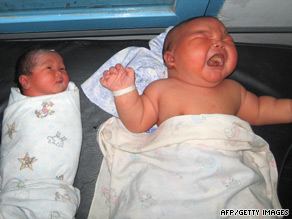
Giant baby born in Indonesia


A baby made his way into the world this week in Indonesia at 19.2 pounds (8.7 kg) -- about three times the weight of an average newborn.

Muhammad Akbar Risuddin, born Monday, is thought to be the heaviest baby born to date in Indonesia.

"I was very surprised. I thought it was twins," said Binsar Sitanggang, the lead doctor in the cesarean-section delivery at Abdul Manan Hospital in North Sumatra.

"It needed a longer time than normal to deliver this baby," Sitanggang said. "He was hardly breathing when we took him out. But, thank God, he is healthy."

His parents, Hananuddin and Ani, who like many Indonesians use only one name, have two other children. Both were big at birth but were not abnormally large. Their new addition is 24.4 inches (62 cm) long.

"We can compare this giant baby with a 9- to 10-month-old baby," Sitanggang said. "Both his parents are tall and big, so there might be a genetic cause for this."

Sitanggang said the baby has already developed a robust appetite, requiring instant milk as well as breast milk.

The boy has become somewhat of a celebrity. Curious people streamed into the hospital Friday for a glimpse. Even the mayor came by and had the honor of naming the infant after himself.
The world's heaviest baby was born in 1879 in Ohio and weighed 23.8 pounds (10.8 kg), but the baby died 11 hours later, according to Guinness World Records. The heaviest baby to survive was a boy born in 1955 in Aversa, Italy. He weighed 22.6 pounds (10.2 kg).

source cnn.com

Pilot recovering, other still missing after French crash

The pilot rescued after the crash of two French fighter jets is recovering aboard an aircraft carrier, the French Defense Ministry said Friday, while the search continued for the pilot of the other plane.

The rescued pilot is "healthy and safe," the defense ministry said. It did not identify him or offer further details about his condition.

"Significant air and sea assets are deployed at present in the area of the incident to try to recover the second pilot," the defense ministry said in a statement.

The jets crashed Thursday in the Mediterranean Sea, about 30 kilometers (19 miles) from the city of Perpignan.

They were on their way back to their respective aircraft carriers after carrying out a mission to test the operational capacity of their group, the ministry said.

The planes were Rafale fighters, manufactured by Dassault Aviation. They were unarmed, the ministry said.

source cnn.com

Renault's F1 sponsors crash out of contracts


Renault was yesterday hit by the fallout of its Formula One team's "Crashgate" scandal after two of its sponsors announced they were terminating their contracts with immediate effect.

ING, the Dutch bank and Renault Formula One's title sponsor, said it was "deeply disappointed" at the sequence of events that resulted in the team's two-year suspended ban for ordering one of its drivers to crash deliberately in last year's Singapore grand prix.

The bank had announced in February that it would not be renewing its three-year sponsorship of the team after the end of this season, but has now decided to part company with Renault with four races of the season remaining. CNN Exclusive: Look inside Force India's team workshop.
Renault yesterday also lost the backing of Mutua Madrilena, one of Spain's biggest insurance groups whose main business is auto insurance.

Mutua Madrilena has demanded the withdrawal of the company's name from the team's cars, although it will continue to sponsor Renault's Spanish driver, Fernando Alonso.

In a statement, Mutua Madrilena said it believed the incident was "extremely serious and compromised not only the integrity of sport, but endangered the physical safety of spectators, riders and staff of the circuit, all of which can affect the image, reputation and good name of the sponsors of the team".

On Monday, Renault escaped a heavy fine and possible expulsion from F1 from the Federation International de l'Automobile after the team last week said it would not contest the charges against it.

However, Flavio Briatore, who left his position as team principal last week, was given a life ban from the sport.

Pat Symonds, its former engineering director, was banned for five years.

Mutua Madrilena began partnering Renault in F1 in 2005, the year Renault and Alonso won the first of two consecutive world championships. Mutua Madrilena is also the title sponsor of the Madrid Open tennis tournament.

Renault said Mutua Madrilena was "not a major sponsor", adding that it was not aware of discussions with other sponsors about the implications of the Crashgate scandal. Renault indicated this week that it intended to stay in F1.

Renault's other sponsors are Total, the French multinational energy company, Bridgestone tyres, Pepe Jeans, Universaria, an online education network, and Megafon, the Russian mobile phone operator.

The European Sponsorship Association warned this week that cheating allegations in high-profile sports put the funding of sports teams and bodies at risk.
source cnn.com

Chavez reveals personal side, criticizes U.S.


Venezuelan President Hugo Chavez revealed a deeply personal side in an interview Thursday night, saying he loves Jesus Christ and would have liked to play Major League baseball in Yankee Stadium.

He also expressed a fondness for American people and culture, saying he likes the movie actor Charles Bronson and the poet Walt Whitman. He loves to sing, he said, though he does not do it well.

And Chavez had kind words for the U.S. security detail protecting him during his visit to New York, saying he chatted with them while out walking and that they "have been very gracious, very efficient and very attentive, very kind."

In an exclusive interview with CNN's Larry King, Chavez spoke at length about a host of issues: relations between Venezuela and the United States and his hopes for improved ties with President Barack Obama; Iran, Israel and those who deny that the Holocaust existed; efforts to overthrow him and have him assassinated; criticism that he is power hungry and trying to silence critics.

Chavez, a self-proclaimed socialist, spoke with King a few hours after giving a speech to the U.N. General Assembly, in which he praised Obama but criticized some U.S. policies.

When asked whether he is misunderstood in the United States, Chavez seemed to turn reflective.

"I'm a man with many defects," he said. "I love. I sing. I dream. I was born in the poor countryside. I was raised in the countryside, planting corn and selling sweets made by my grandmother. My children, my two daughters are with me and I want a better world for my grandchildren, for your grandchildren.

"Now, they demonize me. But that's the start of these world campaigns to try to defend what you cannot defend -- a system that is destroying the world. ... I'm a Christian. I want the world of justice and equality. This is the only way to achieve peace."

Chavez then talked about his religious upbringing and current faith.

"I was an altar boy," he said. "My mother wanted me to be a priest. I am very Christian and Catholic. ... I'm very faithful. I believe in God, in Jesus Christ. I love Jesus Christ. I am a Christian. ... I cry when I see injustice, children dying of hunger."

His comments were all the more remarkable because Chavez and the Catholic Church have been at odds since he came to power in 1999. The church has been one of his major critics, with Pope Benedict XVI and other church leaders expressing concern over what they see as attempts by Chavez to limit the church's influence. Chavez's efforts to change anti-abortion laws have been at the top of those concerns.

Chavez, in turn, has referred to church leadership as a "tumor."

Speaking of other matters, Chavez said he hopes for improved relations with Obama, but "we want relations based on respect, relations of peoples where we are respected."
That has not been the case so far, he said.

"Most governments in the United States in a hundred years have not respected the peoples of Latin America," Chavez told King. "They have sponsored coup d'etats, assassinations. It's enough. We want to be brothers and sisters. We want respect and equality."

Chavez particularly criticized former President George W. Bush, whom he accused of orchestrating an assassination attempt on the Venezuelan leader during a short-lived coup in 2002. Chavez regained power within days.

"The Bush government toppled me," he said. "They asked for my assassination. They disrespected us. ... I saw my assassins. ... I was a prisoner in Venezuela, being a president. They took me to the seaside. I was debating with those who wanted murder me. They received the order to kill me. However, at this very moment, a group of soldiers refused. They did not kill me, but I saw those who wanted to kill me, and the order came from the White House."

Chavez also expressed concern that the United States, which he calls "the empire," still would like to topple him. As he has numerous times in recent weeks, Chavez criticized U.S. plans to begin operating out of military bases in neighboring Colombia. The United States says it needs a presence in Colombia to fight drug traffickers. Chavez sees a sinister intent.

When asked what country he fears would harm him, Chavez replied, "The empire. The empire. Seven military bases ... in Colombia, that's a serious threat against Venezuela."

Chavez also defended his relationship with Iran but denied having said that Iran would help Venezuela obtain nuclear technology. Iran has embarked on a nuclear program that the United States and other nations think will lead it to develop nuclear weapons before long.

"They have fooled you," Chavez said. "I've never said that Iran is going to help us to have nuclear technology. ... That's a strategy to attack Venezuela and say that we are building an atomic bomb. That's the next accusation. And I'm going to say this now: Please, come on. That's crazy. That's crazy."

Chavez said he does not agree with Iranian President Mahmoud Ahmadinejad's contention that the Holocaust, in which 6 million European Jews were killed during World War II, never existed.
"But there also was another holocaust in South America," Chavez said. "I do not deny the Jewish Holocaust. And I condemn it. But in South America, when the Europeans arrived, there were close to 90 million Indians; 200 years later, we only had four million remaining. That was a holocaust. And the Europeans denied this holocaust."

Israel came under criticism from Chavez, who called it a "small country with atomic bombs, and very aggressive country. ... They have massacred entire families. It is a war-mongering country."

Turning to the situation in his own country, Chavez denied that he is trying to shut down critical media, such as the independent Globovision TV station. Government officials have levied several charges against the station, saying that it is disseminating false information and trying to foment dissatisfaction against Chavez.

The Chavez government has repealed licenses for other independent TV and radio stations, and has threatened to do so against Globovision.

Former U.S. President Jimmy Carter this week joined human rights groups and others who have expressed concern over what they see as Chavez becoming too authoritarian. Chavez dismissed the criticism.

"Never in Venezuela have we had so much freedom of speech as now," he said.

Pressed by King about whether he is going to shut down Globovision, Chavez answered, "I do not know. It depends on them. If they keep on sponsoring coup d'etats, if they keep on calling for my assassination, if they keep on breaching the law even as well, it is not Chavez that's going to close them. I want to apply the law. We need to respect the law. It is the law. It's out of logic, and it's pure logic."

As to Carter, Chavez said, "Yes, I read that and I regret for him, because I think he's totally confounded and lost. It's a long time since he visited us. I respect him enormously, but I think he is wrong. He's a victim of so much falsehood in the world."
source cnn.com

Thursday, September 24, 2009

Nintendo cuts price of Wii for first time


Nintendo on Thursday announced the first price cut for its Wii games console following declining sales and price competition from Microsoft and Sony.

The Japanese company said the price of the Wii would drop $50, or 20 percent, to $199.99 in the U.S. on Sunday. Its price is also being cut by 20 percent in Japan to Y20,000 from October 1, and the same will apply in Europe from October 2.

The Wii, launched in November 2006, had gone longer than any console in history without a cut of its initial price.

In March, however, it was overtaken in sales by Sony's PlayStation 3 in Japan and it has suffered dramatic declines in sales in the U.S. this year. In August, Nintendo sold 277,000 units in the U.S., down from 453,000 a year earlier, according to research firm NPD. The price cut will be seen as an attempt by the company to bolster sales of the Wii entering the crucial holiday season period.

"I wasn't expecting a price cut," said Haruhiro Tsujimoto, the president of publisher Capcom.
"I'm surprised and I welcome it," said Naoya Tsurumi, managing director of consumer business at Sega, which will publish Mario & Sonic at the Olympic Winter Games for the Wii next month. "I hope that this is very good news for us for Christmas."

"This year especially there's been a bit of saturation in Japan and western markets so this price cut will increase the sales again," said Kenji Matsubara, president of Koei Tecmo, a large Japanese game publisher.

Microsoft cut the price of its basic Xbox 360 Arcade model by $80 to $199.99 a year ago and saw sales rise 20 percent in the first half of this year.

Sony said on Wednesday that sales of the PS3 in the U.S. had risen 300 percent since it dropped the price by $100 and introduced a slimmed down version of the console this month.
Nintendo is still the clear leader in current generation console sales with more than 52 million Wiis sold worldwide up to the end of June.

"Wii has reached more video game players than any game system before because it attracts everyone both men and women, and people of all ages," said Cammie Dunaway, Nintendo of America's sales and marketing chief, in a statement.

"Our research shows there are 50 million Americans thinking about becoming gamers, and this more affordable price point and our vast array of new software mean many of them can now make the leap and find experiences that appeal to them, whatever their tastes or level of gaming experience."

Nintendo is launching Wii Fit Plus, a follow up to the game that uses its balance board accessory, on October 4, and a new Super Mario Bros game is coming on November 15.

source cnn.com

Michael Moore: Capitalism has proven it's failed


It has been 20 years since filmmaker Michael Moore took on General Motors in "Roger and Me." He's still sticking it to big business for what he sees as the deliberate shafting of the little guy.

His new film, "Capitalism: A Love Story," opened Wednesday in New York and Los Angeles, California, and opens nationwide next week.

Moore talked with CNN's Larry King about whether capitalism is key to the American dream or the cause of an American nightmare. The following is an edited version of the interview.

Larry King: You describe this movie as the culmination of all the films you've made. Does that mean this is it?

Michael Moore: No. I hope not. It means that, for 20 years, as you said, I've been doing this. I started out by showing people what General Motors was up to and how this was a company that was making a lot of bad decisions and it wasn't good for the company nor for the country. That was 20 years ago.

And since then, I've covered a number of issues and different things. But it all seems to come back to this one issue of "follow the money."

Who's got the money? And whoever has the money has the power. And right now, in America, tonight, Larry, the richest 1 percent have more financial wealth than the bottom 95 percent combined.

King: You're in that 1 percent, though?

Moore: I don't think I'm in that 1 percent, but I make documentary films. But I mean, obviously, I do well because my films have done well. But, you know, even if I were, I think it's my responsibility -- my moral duty that if I've done well, that I have to make sure that everybody else.

King: Does well too or has a chance?

Moore: Well, has at least a chance but that -- and that the pie is divided fairly amongst the people and not just a few people get the majority of the loot and everybody else has to struggle for the crumbs. Watch Moore discuss

King: Are you saying capitalism is a failure?

Moore: Yes. Capitalism. Yes. Well, I don't have to say it. Capitalism, in the last year, has proven that it's failed. All the basic tenets of what we've talked about the free market, about free enterprise and competition just completely fell apart. As soon as they lost, essentially, our money, they came running to the federal government for a bailout -- for welfare, for socialism.
And I thought the basic principle of capitalism was that it's a sink-or-swim situation. And those who do well, the cream rises to the top and, you know, those who invest their money wrongly or, you know, don't run their business the right way, then they don't do well.

And if you run your business the wrong way, where does it say that you or I or anybody watching this has to bail them out?

I understand why everybody seemed to get behind it, because a lot of people were afraid, because these people down on Wall Street had taken our money and made bets with it. I mean, they essentially created this invisible virtual casino with people's money -- people's pension funds, people's 401(k)s. They took this money and they made bets. And then they made bets on the bets. And then they took out insurance policies on the bets. And then they took out insurance against the insurance -- the credit default swaps.

King: You started filming before Lehman Brothers went belly up.

Moore: Yes.

King: The stock market tanked. Now, how did the events, as it occurred, affect the movie? Did it change gears?

Moore: It didn't change in terms of what I was looking at, but it did, obviously, offer probably the best example of why this is a system that is really corrupt at its core -- corrupt because it doesn't, it isn't run with democratic -- small "d" -- democratic principles. There's no democracy in our economy. You and I and the people watching have no say in how this economy is run. The upper 1 percent, the people down on Wall Street, the corporate executives, they're the people that control this economy.

King: And they don't want to see the economy do well? They don't want to see people...

Moore: Oh, they sure do.

King: Don't they want people to make money so they can buy the products? I mean it's silly if they want people unemployed?

Moore: Oddly enough, yes.

King: Why?

Moore: I'll tell you why. Because your employees are your biggest success. And, as you've noticed in the last few months, as the unemployment rate has gone up, so has the Dow Jones. Now, you'd think, you know, that Wall Street would respond with "Oh, my God, unemployment is going up, you know, this is bad for business." But the reality is, is that Wall Street likes that. They like it when companies fire people because immediately the bottom line is going to show a larger profit.

King: Are you saying the investor is more important than the employee?

Moore: Yes. The investor -- and the investor, these days, they want the short-term, quick profit and they want it now. But in the long-term, here's what happened. When I was on this show 20 years ago, 20 years ago this week, I was here with "Roger and Me".

King: I remember.

Moore: And General Motors, that year, made a profit of $4 billion. And yet they had just laid off another 30,000 people. Now, why would you lay people off when you're making a record profit of $4 billion?

I mean that was totally insane. But they thought, well, you know, we can make a bigger profit. Maybe we can make $4.2 billion if we move those jobs to Mexico. And so they're always, you know, we can make a little bit more money if we do this. By firing those workers, Larry, they got rid of the very people who buy their cars.

source cnn.com

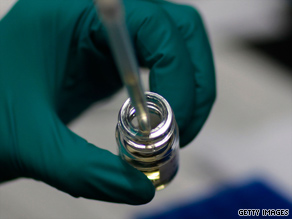
Combo vaccine reduces risk of HIV infection, researchers say


A vaccine to prevent HIV infection has shown modest results for the first time, researchers have found.

In what is being called the world's largest HIV vaccine trial ever, researchers found that people who received a series of inoculations of a prime vaccine and booster vaccine were 31 percent less likely to get HIV, compared with those on a placebo.

"Before this study, it was thought vaccine for HIV is not possible," Col. Jerome Kim, who is the HIV vaccines product manager for the U.S. Army, told CNN.

Kim emphasized that the level of efficacy was modest, but given the failures of previous HIV vaccine trials, "yesterday we would have thought an HIV vaccine wasn't possible."

He called the results from the trial an important first step that will help researchers work toward a more effective vaccine.

Researchers have tried to prevent the spread of HIV since they discovered its cause in 1986. Previous vaccine trials failed to prevent infection. And during one trial, the vaccine seemed to boost the chance of being infected, which ended testing early.

The new study was conducted in Thailand, with more than 16,000 people between ages 18 and 30 participating. They were all HIV negative at the beginning of the trial.

Nearly 8,200 received a placebo and a similar number received a combination of six vaccines over six months. All were followed for three years.

"This shows a statistically significant effect," Kim said.

He cautioned that a lot more research was necessary, because the vaccine did not prevent everyone from being infected.

Fifty-one people in the vaccine group eventually contracted HIV, compared with 74 in the placebo group.

"These results show that development of a safe and effective preventive HIV vaccine is possible," said Col. Nelson Michael, who is director of the U.S. military HIV research program.
The combination of vaccines tested targeted strains circulating in Thailand. It was unclear how the vaccines would work elsewhere, Kim said.

Researchers will announce details of their initial findings in October at the AIDS Vaccine Conference in Paris, France.

The study was funded by the National Institutes of Allergy and Infectious Diseases and the U.S. Army Medical Research and Materiel Command.

According to Kim, the U.S. military was involved in the study because U.S. service members are at risk and "there's a national security threat from HIV."

He said Congress set up a program to protect service members from HIV and the U.S. military has collaborated with health officials and researchers in Thailand for a long time.

The vaccines are manufactured by Global Solutions for Infectious Diseases and Sanofi Pasteur. The Thai Ministry of Health carried out the clinical trial.
source cnn.com

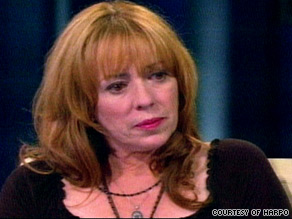
Mackenzie Phillips: Dad wanted me to be his wife


In an interview with Oprah Winfrey to air Wednesday, Mackenzie Phillips says that she was raped by her father while still a teenager.

"I woke up that night from a blackout and found myself having sex with my own father," Phillips read aloud from her book, "High on Arrival," during the hour-long interview with Winfrey.

"I came out of that blackout and realized what was happening. ... I slid right back into it and woke up the next morning in my own hotel room and not with him," she continued to read. "Your father is supposed to protect you, not [expletive] you."

John Phillips died in 2001.

Phillips, now 49, said she was 17 or 18 the first time she can remember having sex with her father. Watch Phillips talk about her struggles »

When she confronted him and told him they needed to talk about how he raped her, Phillips said, he responded with confusion.

" 'Raped you? Don't you mean when we made love?' " she told Winfrey. "I thought, wow, I'm really on my own here."

Her intimate relationship with her father, the famed Los Angeles musician and co-founder of the Mamas & Papas, didn't end there, she told Winfrey. Read about John Phillips' sometimes troubled life

"Over time, in 1980, I'm on the road with my Dad in the New Mamas and Papas, and I begin waking up after drug-fueled events with my pants around my ankles and my father sleeping beside me," Phillips recalled. "It didn't happen every day, it didn't happen every week, but it certainly happened many times. If you're me, you box it away. It's one of those things where you tell yourself don't look. There's a video reel playing in my head, and I've spent 30 years trying not to look."

By the time Phillips turned 29, it had become a consensual relationship, she said, although she was very much aware that it was wrong and shouldn't have been happening. "It was the Stockholm syndrome where you begin to love your captor. I felt love for my father, but the moment he tried to make it a romance, I was shot into the present time."

This epiphany came after the pair toured with the New Mamas and Papas in Hawaii, where Phillips had adjoining rooms with her father. She said she rarely went to her own room during that trip, and one night she found herself in bed next to her father in a drug-induced stupor.

"Dad said, 'We could just run away to Fiji, and we could take [his children] Bijou and Tamerlane and raise them as our own,' " Phillips recounted to Winfrey. "He was delusional, talking about living with me as man and wife, and raising my siblings, his children, as our children. The moment he tried to make it romantic, I thought, we're going to hell for this."

But that wasn't the moment that caused Phillips to end it completely. It wasn't until the mother of one found herself pregnant again and didn't know whether the father of the baby was her then-husband, Shane Fontayne, or her own father.

"I was in a relationship with my son's father as well; he knew nothing," she said. "He's one of the dearest men and one of the best parents to our son. He was always there for me. I came up pregnant, and I had an abortion. And I never let [John Phillips] touch me again."

Phillips' story isn't without its detractors: Her former stepmother, Genevieve Waite, released a statement to the "Oprah Winfrey Show" denouncing Phillips' account.

"I am stunned by Mackenzie's terrible allegations about her father," Waite wrote. "I would often complain about her overly familiar attitudes towards him, and he said it was just her way. John was a good man. ... He was incapable, no matter how drunk or drugged he was, to have sexual relations with his own child."

"McKenzie's drug addiction for 35 years has been the result of many unpleasant experiences," Michelle Phillips, John Phillips' second wife, told CNN in a statement. "Whether her relationship with her father is delusional or not, it is an unfortunate circumstance and very hurtful for our entire family."

Mackenzie Phillips acknowledged that her family members aren't happy about her decision to release the secret she said she's held for more than 30 years, but during her interview with Winfrey, she did have one sister in her corner: her on-screen sibling Valerie Bertinelli.

Bertinelli played Phillips' younger sister on the 1975-84 sitcom "One Day at a Time." Bertinelli said she has watched Phillips struggle with drugs and alcohol for years but never knew the reality of what Phillips was going through.

Neither of them had seen each other since Phillips was arrested in Los Angeles International Airport in 2008 for drug possession; she was en route to meet Bertinelli and the rest of the cast for a "One Day at a Time" reunion on "The Rachael Ray Show."

"I've always had a lot of regrets," Bertinelli said, "because I experimented right along with Mack. I did coke, and I did it with her, and no one ever knew about it. And I've had guilt that this incredibly sweet, big-hearted woman [was blamed] for things [that] in my mind weren't really her fault."

Phillips also talked with Winfrey about her drug use. She said her exposure to drugs began in her childhood in the Bel Air, California, home owned by her father.

"The first time I did cocaine I was 11," she said. "I was staying with my father and his wife at the time and my brother, and my father never made any bones about doing drugs in front of his children or later on sharing drugs with us. He taught me to roll joints when I was 10."

While she was acting alongside Bertinelli on "One Day at a Time," she continued to dabble in drugs and alcohol, and her drug use began to escalate along with her stardom.

She said that her father shot her up for the first time in her teens and that he was the one to give her step-by-step instructions on how to shoot cocaine. A few years later, just after she turned 18, Phillips was arrested when she was found collapsed on quaaludes on an L.A. street.

Phillips said her father's response was, "Congratulations! Now you're a real Phillips. Now you know that even though they caught you, the rules don't apply."

After watching Phillips tell her story to Winfrey, Bertinelli told Phillips she regretted not being there for her on-again, off-again friend.

"I was so wrapped up in the own drama of my life, because I dealt with substance abuse. I was saving myself, and that's not always right. I wasn't there for my sister," she said.

After everything that Phillips recalled happened to her at the hands of her father, she said, she doesn't hate him.

"I have to say that I loved my father, and I still do. I've been trying to come to terms with this very difficult past," Phillips told Winfrey.

She continued, "I can't be the only one this has happened to. Someone needs to put a face on not only nonconsensual incest, but consensual incest, and I know that I can't be the only one who's lived through this. So in finding this redemption, maybe I'm helping someone else."

source cnn.com

Wednesday, September 23, 2009

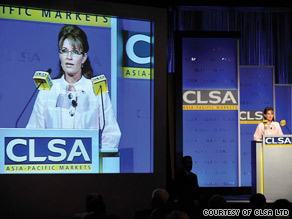
Some early exits as Palin woos Hong Kong investors


Sarah Palin touched on a host of topics -- including Reaganomics, China and human rights, Tibet, the Asian and U.S. economies, family and moose in Alaska -- as she delivered a speech to investors Wednesday in Hong Kong, according to audience members.

The former Republican vice presidential candidate was the keynote speaker at the 16th CLSA Investors' Forum, in what was billed as her first speech outside North America. She recently stepped down as Alaska's governor.

Her 90-minute address, which was closed to the media, was heard by 1,100 people, according to CLSA head of communications Simone Wheeler.

Those who attended her speech said she did well, though some could be seen leaving early on. A few of those people said they were heading to other forum offerings. Most people declined to speak with the media about the speech.

"I can't say I was actually impressed," said Mel Goode, a business developer from New York who lives in Hong Kong. "She speaks well -- a broad spectrum of what her beliefs are, family views.
"She didn't get (into) anything too harsh ... just kept it, five children, my husband's here, we believe in what Asia's doing, America has a way to go to get itself back together, Reaganism."
One area she touched on was human rights, calling on Beijing to be more attentive to the issue in Tibet and countries such as Myanmar and North Korea, he added.

Rajesh Kothari, a fund manager, noted that Palin's "address was more geared towards politics and very focused on China."

"She did speak about the political implications of China's rise on Asia and the region, and China with America," he said. "I was quite impressed by her knowledge. It seemed like she did her homework now, this time around."

Palin also spoke about Alaska, the need for less government and fewer regulations, fiscal responsibility and "how the U.S. and Asia can be better partners on the global stage," said Jasbeena Layman, a fund manager in the United States.

"I think she is very well spoken," she said.

Palin's political ambitions are unclear, though she has recently attacked U.S. President Barack Obama's health care initiative. During the 2008 presidential campaign, she was lampooned by critics and comedians for suggesting that she had foreign policy experience because she was then governor of Alaska and "you can actually see Russia" from part of the state.

Goode said it appeared Palin had "learned quite a bit" from the vice presidential campaign spotlight.

"I am sure she's taken enough criticism where, at this point, she would definitely try to learn a little bit in her mistakes," he said.

He said she shied from discussing U.S. politics, though she did say it had been 10 months since Obama took office and Americans were questioning whether he had made significant headway.
Past CLSA keynote speakers include former U.S. President Bill Clinton, former Vice President Al Gore, rocker and activist Bob Geldof, South African Archbishop Desmond Tutu and former U.S. Federal Reserve chief Alan Greenspan, Wheeler said, noting that CLSA does not disclose whether or how much it pays speakers.

"What we look to do is invite our keynote speakers who we feel are opinion makers, who are newsworthy and who we feel our clients -- a very broad international client base -- would be interested in hearing from," Wheeler said Monday, noting that CLSA was a politically neutral, independent brokerage.

Chad Tendler, who works in the financial industry, said Palin's speech tried "to tick a lot of boxes," touching on domestic and foreign policy, as well as issues that resonate with investors. He said she spoke about the U.S. relationship with China and recent issues, such as a tariff dispute between the two nations involving the sale of tires.

He said her speech was "very well scripted," but a question-and-answer session afterward "brought out a bit more color about her as a person" and reminded everyone of "the candidate who we all saw campaigning for vice president."

She talked about her family, her interests and even Alaskan moose, he said.

"She said on her way to the airport in Anchorage, there was a moose in the town," he said. "As she arrived in Hong Kong, coming in from the airport, she was surprised -- not surprised -- but, very different from the rural setting to an urban setting."

Wheeler said Palin would be in Hong Kong only for the speech, adding that it was a short trip. Chinese-language media did not give much coverage to her appearance, and some residents and visitors were surprised to learn she was in town.
source cnn.com

Taliban suspected of stockpiling 'missing' Afghan opium


Enough Afghan opium to supply world demand for two years has effectively gone missing, with the Taliban suspected of stockpiling supplies in a bid to corner the market, the United Nations Office for Drugs and Crime (UNODC) has revealed.

Afghanistan is the world's leading narcotics supplier. Earlier this month, a U.N. study revealed Afghanistan's opium production had dropped dramatically this year partly because of new aggressive drug-fighting tactics in the country.

According to the UNODC report, production dipped by 10 percent this year while cultivation fell by 22 percent.

However, a senior U.N. spokesman warned that this positive news should be treated with caution.

"We figure the world needs around 4,000 tons of opium a year for licit and illicit purposes," Walter Kemp of the UNODC told CNN. Has enough empasis been placed on drug trafficking?
"But this year around 6,900 tons was produced, with 7,700 tons delivered last year and more than 8,500 the year before that.

"So if the world only needs around 4,000 tons of opium and a further 1,000 is seized, where is the rest of it going?"

According to Kemp, world demand for opium remains stable yet prices are not crashing, which suggests a large amount of opium is being withheld from the market.

"Our guess is that around 12,000 tons of opium has been stockpiled somewhere -- not all in one place but in and around Afghanistan," he added. "So while production might be coming down -- mostly because of market reasons -- there's still a lot of product around to satisfy demand for about two years."

It is unclear exactly who is responsible for this but there's growing evidence, according to the U.N., that the Taliban are becoming increasingly involved in the industry and could be sitting on huge stockpiles of opium to use as credit for financing their activities.

"Farmers will be keeping small amounts back as credit for things such as a dowry or buying livestock," said Kemp. "But they won't have the means to store supplies in the kind of quantities we're talking about here.

"It's probably in the hands of people with the ability to store it underground and to keep people away from it through corruption or force."

Hakan Demirbuken, a research expert on the U.N.'s Afghan Opium Trade Program, said Taliban involvement in the drugs trade is not limited to taxing Afghan opium farmers and traders in return for their "protection."

He told CNN: "Last year we estimated that Afghan poppy farmers earned around $730 million, while traders who take the product on to the border earned around $3.4 billion."

"From this lucrative business the Taliban took around $125 million in tax.

"But according to U.N. figures they need around $800 million per year for their operational needs."

However, most of the trade is controlled by organized criminal groups from outside Afghanistan. Therefore Demirbuken believes groups such as the Taliban and al Qaeda will be forging links with gangs such as the Turkish and Iranian mafia in order to become more involved in the production and trafficking stages.

In addition to the increased revenue greater involvement would provide, he said groups such as al Qaeda "will have noted the destabilizing effect this industry -- and the sums of money it generates -- can have on more vulnerable countries with weak governments."

In October last year, the United States told NATO members that the drug trade was a threat to coalition troops because there was a direct connection between it and Taliban insurgents in Afghanistan.

"There is what we call a nexus of insurgency. There's a very broad range of militant groups that are combined with the criminality, with the narco-trafficking system, with corruption, that form a threat and a challenge to the future of that great country," then-U.S. commander in Afghanistan Gen. David McKiernan told reporters.

As a result NATO combat forces have now been actively attacking militants, drug laboratories and buildings connected to insurgents with ties to drug lords for the first time since the start of the Afghan conflict in 2001.

Meanwhile, international law enforcement organization, Interpol, believes there has been a change of tactic involving Afghanistan's opium, with much more of it being turned into heroin within the country and stockpiled or couriered out, primarily through Iran.

Historically Afghanistan has been responsible only for cultivating raw opium, with the conversion into a final product taking place across the border in Pakistan or in Iran and Turkey, according to the UNODC.

Producing heroin in Afghanistan makes it easier to conceal and transport than the bulkier raw opium.
source cnn.com